
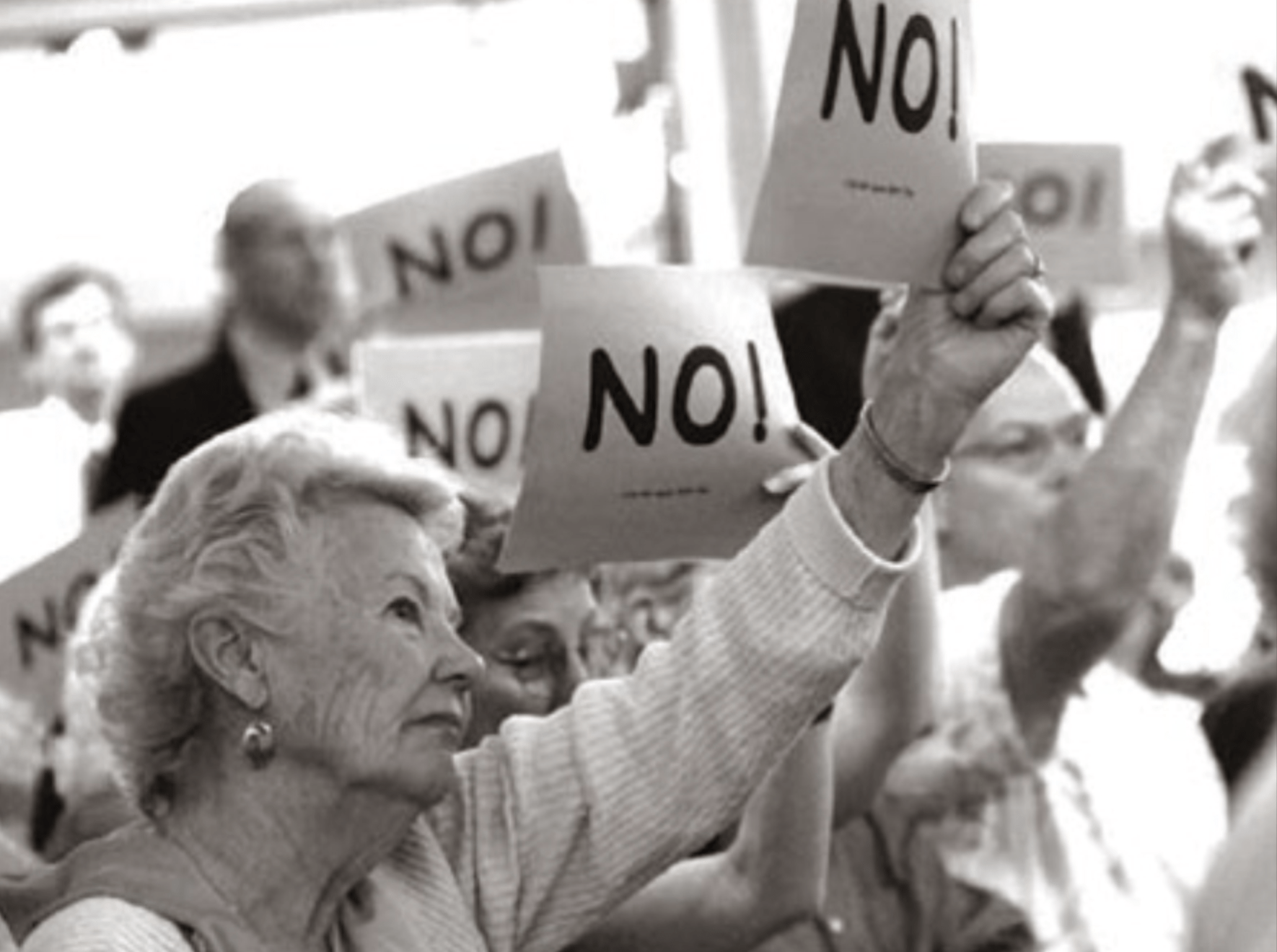
 Tri-Valley CAREs supporter protests at a former National Environmental Policy Act hearing
A November notice from the U.S. Department of Energy’s (DOE) National Nuclear Security Administration (NNSA) erases the previously announced public involvement requirement and thereby fast-tracks increased plutonium use at its Lawrence Livermore National Laboratory after decades of limits protected the public from potential risks.
First announced In January 2025, the NNSA proposal for “Enhanced Plutonium Facility Utilization” at the Livermore Lab was to include a “Draft Supplemental Environmental Impact Statement” (SEIS) according to its Federal Register Notice. It stated that, “NNSA will prepare a Draft SEIS. NNSA will announce the availability of the Draft SEIS in the Federal Register and local media outlets. NNSA will hold one or more public hearings for the Draft SEIS. Any comments received on the Draft SEIS will be considered and addressed in the Final SEIS.”
DOE and NNSA have conducted NEPA reviews of major projects in this way since the law’s inception in 1969. The ability of the public and organizations like Tri-Valley CAREs to review and comment on these draft NEPA documents and the detailed “hard look” analyses that the law requires be included, are essential elements of in the democratic process that enables directly affected communities to provide input in government decision-making on nuclear weapons programs that affect them. On numerous occasions, public comments on draft NEPA documents have led to significant changes to the agency’s final decisions.
However, NEPA has long been criticized for slowing the government’s project approval timing. On his first day in office of his second term, President Trump took action to gut NEPA, under the guise of a “national energy emergency.” He issued Executive Order 14154, “Unleashing American Energy,” which instructs the White House Council on Environmental Quality (CEQ) to provide new NEPA implementation guidelines that “will expedite permitting approvals” at federal agencies.
President Trump also withdrew Carter-era executive order authorizing CEQ to issue rules governing agencies’ implementation of NEPA (Tri-Valley CAREs commented on this recission). In response, CEQ issued guidance telling federal agencies to complete changes to their NEPA regulations and circulated a template to use when updating their regulations when implementing NEPA. The template suggests agencies make it optional to publish draft environmental documents and that they remove public input opportunities outside of the initial scoping period. While the CEQ notes that the “template is not a regulation, does not carry the force and effect of law, and is not intended to bind the public or any federal agency.
DOE jumped on the chance to exclude public involvement in its new interim final rule revising its long standing NEPA implementing procedures in July. The aforementioned Livermore SEIS on Enhanced Plutonium Utilization and another ongoing environmental impact statement at Sandia National Laboratory in Albuquerque, New Mexico are the first cases applying its revised NEPA regulations to NNSA nuclear weapons program sites.
While details of the enhanced plutonium utilization plan will not emerge until the final SEIS is released, it will allow for significantly more nuclear weapons-grade plutonium in workspaces at the Livermore Lab and will increase the security category at the site to allow for the increase. Additionally, the plan exponentially increases the “throughput” of plutonium and other special nuclear material entering and exiting the lab, using busy roads and freeways such as the nearby I-580.
Livermore Lab lost its authority to have bomb-usable quantities of Special Nuclear Material (SNM) and “deinventoried” (or removed) those larger quantities of plutonium and highly-enriched uranium in 2012. The site had repeatedly failed security drills in the early 2000’s and it was determined that its nuclear weapons maintenance and development responsibilities under the stockpile stewardship program could be carried out without the larger SNM quantities. Major funding was appropriated to improve the lab’s supercomputing capability as well as the National Ignition Facility to augment the Lab’s materials science in the absence of the SNM.
To the public, this new plan turns back the clock to allow the Lab to conduct riskier operations with plutonium above what is currently authorized. The new plan could also allow increases of other nuclear materials in addition to plutonium. As the lead lab on several new nuclear warhead programs, including the W87-1 warhead for the new Sentinel Intercontinental Ballistic Missile (ICBM) program, Livermore Lab is also conducting major support work on the agency’s plutonium pit production program.
In March 2025, Tri-Valley CAREs submitted scoping comments on the SEIS notice, but these were hamstrung by the lack of detail available. We expected an extensive, multi-volume Draft SEIS would be released soon. We have already developed a strategy to encourage public involvement in the public hearing and written comment process, and committed to drafting extensive organizational comments which would include consulting outside experts.
Instead, the agency now plans to issue the final SEIS along with a Record of Decision and no further opportunity for additional public input on this major programmatic change that poses significant risks to the surrounding community.
Tri-Valley CAREs is now strategizing on how to move forward with a potential challenge to this announcement. Join our monthly meeting on January 15th to learn more about our plan, help us strategize and become engaged on the issue!
Para leer esta información en español HAGA CLIC AQUÍ!