
Communities Against a Radioactive Environment

|
Tri-Valley CAREs stops nuclear weapons where they start. We watchdog the nuclear weapons complex and its Livermore Lab, one of two locations that develops all US nuclear bombs and warheads. Nuclear weapons pose one of the great social, economic, and ecological challenges of our time. We work toward their global abolition. |
Air Monitoring at LLNL Main Site Reveals New Information, and it is Not Good…
by Raine Gordon | October 21, 2026 | Blog, Environmental Justice, Nuclear Weapons | 0 Comments
On August 13, 2025, Tri-Valley CAREs submitted a FOIA request to the National Nuclear Security Administration (NNSA).
Take Action to Support Nuclear Safety
by Scott Yundt | October 14, 2026 | Blog, Environmental Justice, Nuclear Weapons | 0 Comments
The DNFSB recently came to Livermore with a message – it is being prevented from carrying out its mission.
Cleanup Without an End Date: What LLNL’s 2025 Groundwater Report Leaves Unanswered
by Anoushka Raj | October 13, 2026 | Blog, Environmental Justice | 0 Comments
More than three decades after groundwater treatment began, LLNL provides no estimate of how much contamination remains.
Beyond the Fence: Join Tri-Valley CAREs for a Walking Tour of Livermore Lab’s Off-Site Contamination and Cleanup
by Anoushka Raj | October 13, 2026 | Blog, Environmental Justice, Events | 0 Comments
Join Tri-Valley CAREs on Thursday, October 22, 2026, from 5:30 to 6:30 p.m. for a neighborhood walking tour exploring the history of groundwater contamination and cleanup near Lawrence Livermore National Laboratory.
Our story
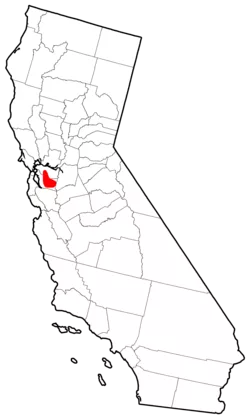
Tri-Valley CAREs was founded in 1983 in Livermore, California by concerned neighbors living around the Lawrence Livermore National Laboratory, one of two locations where all US nuclear weapons are designed. Tri-Valley CAREs monitors nuclear weapons and environmental clean-up activities throughout the US nuclear weapons complex, with a special focus on Livermore Lab and the surrounding communities.
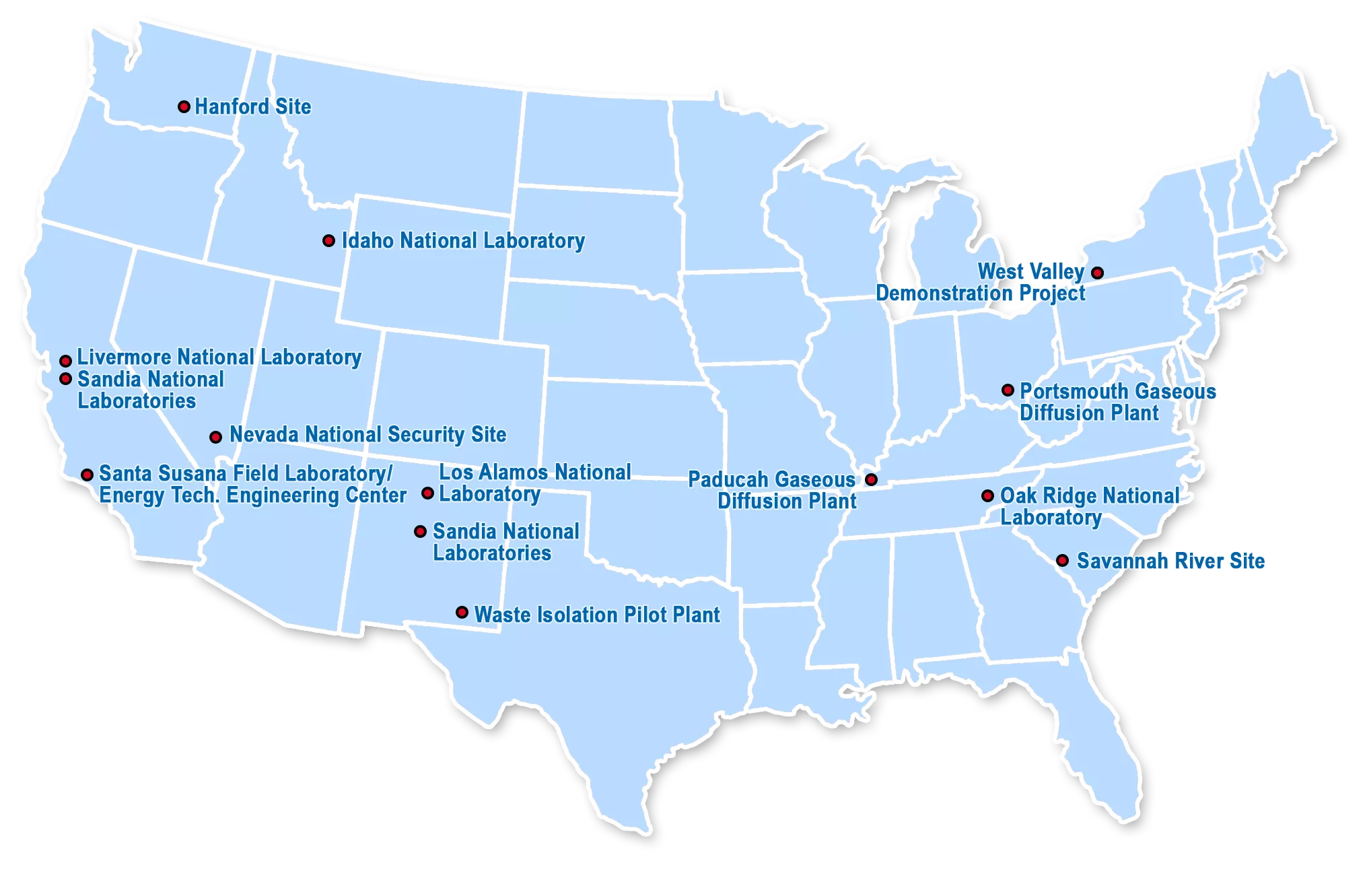
Tri-Valley CAREs’ overarching mission is to promote peace, justice and a healthy environment by pursuing the following five interrelated goals:
- Convert Livermore Lab from nuclear weapons development and testing to socially beneficial, environmentally sound research.
- End all nuclear weapons development and testing in the United States.
- Abolish nuclear weapons worldwide, and achieve an equitable, successful non-proliferation regime.
- Promote forthright communication and democratic decision-making in public policy on nuclear weapons and related environmental issues, locally, nationally and globally.
- Clean up the radioactive and toxic pollution emanating from the Livermore Lab and reduce the Lab’s environmental and health hazards.
Press Room
TVC In the News
No shortage of nuclear weapons
Letter to the Editor, Tracy Press
Patricia Howell
Editor,
I bet you have been checking your budget! Don’t worry! The federal government is on the job! You can cross Bombers, Subs and ICBM’s off your budget list. They’ve increased the Pentagon Budget by 25% for 2027 to $1.5 trillion, largest ever, but don’t cross out War. That is going to be added later at about $50 billion.
You can cross off nuclear weapons. They’ve increased Department of Energy 2027 Budget for nuclear weapons by over $7 billion to a total of $27.5 billion. Within that budget they’ll spend well over $2 billion a year to remediate the radioactive contamination of our nuclear facilities in Hanover, Wash., Savannah River Site, S.C., Los Alamos, N.M., Livermore National Lab, and Site 300 near Tracy to name a few. (All Super Fund sites)
Also you can cross off plutonium pits used in nuclear warheads, because they plan to build special facilities in Savannah and Los Alamos to produce 80 plutonium pits per year to add to our 15,000 (UCS) stored plutonium pits that we currently have. I don’t think they read the Union of Concerned Scientist’s report on Plutonium Production. where they stated that our current supply of “pits” are not presenting security or safety concerns. Viability of the stored “pits” remains intact; the life of plutonium is 24,000 years. However, when preparing for nuclear war, there are never enough warheads for our bombers, subs and missiles.
You’ll want to keep health expenses on your budget list; they’ve not budgeted for workers and others breathing in plutonium, which causes cancer, radiation poisoning, blood disorders, birth defects, etc. You can comment on this budget plan at PitPEIS@nnsa.gov until July 16. Learn more about the program and how to comment at PitPEIS.com. For local impacts, see also www.trivalleycares.org
Patricia Howell
Tracy
Deadly plutonium and families don’t mix
Letter to the Editor, Tracy Press
Gail Rieger
Editor,
I’ve lived In Tracy for 30 years. I’ve watched our town grow from a handful to more than 100,000 residents. Yet, when I logged onto energy.gov to research the government’s plan to restart industrial-scale plutonium bomb core production, I read that the nuclear weapons location in our backyard, Site 300, is a “remote experimental testing facility.”
Remote? Neither our neighborhoods or our roadways are remote! The National Nuclear Security Administration’s new plan includes frequently trucking nuclear weapons grade plutonium on highways, alongside family cars, between the Los Alamos Lab in New Mexico to the Livermore Lab main site.
In my written comments on the plutonium plan, I asked the government to provide an updated map of routes it intends to use. An older map clearly shows Tracy straddling the plutonium shipment route. The government has not published any new map or responded to my concern.
Are our local emergency services prepared to respond to a major plutonium accident – or a terrorist attack to obtain the plutonium? One microscopic particle of plutonium, if inhaled, is enough to cause cancer and other potentially fatal illnesses.
Fortunately, this plan can be stopped before this happens. The NNSA is in the process of conducting a Programmatic Environmental Impact Statement on its new, expanded plutonium bomb core (also called pit) plan. The public comment period extends until July 16, 2026. Public comments can be long or short. You can ask questions.
Learn more about the program and how to comment at PitPEIS.com. For local impacts, see also www.trivalleycares.org
Gail Rieger,
Tracy
Environmental group opposes increased plutonium research at LLNL as feds seek to expand nuclear weapons production
As the National Nuclear Security Administration aims to increase its production of explosive cores for nuclear weapons, a draft environmental impact statement on the goal is available for public comment through mid-July.
The two sites being eyed for production are Los Alamos National Laboratory in New Mexico and the Savannah River Site in South Carolina.
Environmental organization Tri-Valley CAREs officials, however, question the potential roles of Lawrence Livermore National Laboratory in the proposed pit production given the recent publication of an environmental impact report on increasing the amount of plutonium at the laboratory.
“I am opposed to the dangerous plutonium production work planned at Los Alamos and Savannah River Site, and I am opposed to the support work being done here in Livermore,” Tri-Valley CAREs nuclear policy program director Tanvi Kardile said in a statement.
The draft plutonium pit production programmatic environmental impact statement (PEIS) up for comment covers the potential impacts of pit production over the next 50 years at LANL and SRS and “a range of reasonable alternatives”, the draft states.
The comment period closes July 16.
“Lawrence Livermore National Laboratory does not directly support pit production and that would not change under what’s in the PEIS,” NNSA officials told the Livermore Vine in an email interview. “The lab’s role is limited to plutonium research and development, testing, and stockpile certification activities.”
The proposal comes as the U.S. aims to manufacture at least 80 “war-reserve” plutonium pits annually by 2030, according to the draft.
The goal was established in 2018 to “replace existing pits as they age” and to have the capacity to “meet current and planned military stockpile requirements”, the draft states.
Nearly all of the pits in the nuclear stockpile were produced between 1978 and 1989, according to the draft.
“The Nation’s capability to produce plutonium pits is limited and does not meet federal requirements,” the draft explains.
The PEIS evaluates capacities ranging from 30 to 205 pits per year, NNSA officials said.
Pit production involves the receipt, unpacking and storage of material; feed preparation and manufacturing. Production can also involve the reuse of a pit.
The first fully qualified pit for the W87-1 nuclear warhead was verified by the NNSA October 2024, according to the NNSA website.
Just last month, the NNSA approved LLNL to have increased quantities of Plutonium as well as its increase to Security Category II (plutonium metal limited to 2 kg), up from Category III (plutonium metal limited to 400 grams).
“The two are not directly related,” NNSA officials told Livermore Vine.
Tri-Valley CAREs Executive Director Scott Yundt disagreed and said increased utilization of plutonium at LLNL is related to the agency’s aim to increase core production.
“Livermore lab is integral to the plan,” Yundt said in an interview with Livermore Vine.
LLNL is the lead laboratory designing the W87-1 warhead, which requires new plutonium pits, Yundt explained.
The pits are made from plutonium, which has a half-life of 24,000 years, Yundt said. “Plutonium isn’t exactly rotting on the shelf,” he added.
“This newly designed nuclear weapon is the driver for new production, and Livermore Lab is receiving significant funding to do what’s called plutonium pit support work,” he said.
“There’s no analysis of why some of this plutonium work that’s going back to Livermore or coming to Livermore, couldn’t be done elsewhere, where it might be more secure,” Yundt said.
The PEIS was spurred by a settlement agreement reached January 2025 between environmental groups including Tri-Valley CARES and the U.S. Department of Energy and NNSA.
The agencies were found to have violated the National Environmental Policy Act in previous environmental reporting for “failing to sufficiently evaluate the programmatic (as opposed to site-specific) environmental impacts of producing pits at a second location (Savannah River) and by failing to consider reasonable alternatives for pit production locations”, the ruling states.
The settlement was reached through the U.S. District Court for the District of South Carolina.
One of the five public hearings on the draft PEIS was held May 12 at Garré Vineyard & Winery in Livermore.
According to Yundt, all of the approximately 35 commenters expressed opposition to proposed increase in pit production.
The draft PEIS is available here.
Scrutinize nuke plans
May 14, 2026 | Nuclear Weapons, TVC in the News
Manufacturing will be at Los Alamos National Laboratory in New Mexico and the Savannah River Site in South Carolina. In the Bay Area, there will be an increase in experiments and testing at Lawrence Livermore Lab, where there have been past plutonium accidents and releases.
This is not about science; this is about new nuclear warheads and whether our Bay Area air, land, water and health may be subject to future releases.
Due to litigation brought by Tri-Valley CAREs and colleagues, the government is conducting an environmental impact statement and public hearings on its plans.
The Bay Area hearing is Tuesday from 5:30-8 p.m. at the Garre Vineyard Winery, Santa Rosa Room, 7986 Tesla Road, Livermore.
Local nuclear weapons activities
Editor,
Public hearing on nuclear weapons in our back yard!
I am a director for Tri Valley Community Against Radioactive Environment (CARES). It is a citizen group that keeps watch on the activities of Lawrence Livermore National Laboratory and its extensive classified work on research and design for the US nuclear weapons stockpile.
Livermore Lab is requesting $3.2 billion for the budget year 2027. They plan to spend $2.86 billion on “Nuclear Weapons Activities.” The Lab’s funding for research on climate change, alternative renewable energy, and other peaceful research has virtually disappeared over the past 2 years.
Its Superfund cleanup at the main site in Livermore and at Site 300, which is south of Tracy on Corral Hollow Avenue, is also down over that time. There is no timeline for completion. Site 300 is still recovering from the Corral Fire a couple of years ago that wiped out much of the remedial cleanup infrastructure and set things back further.
Conversely, the Lab is ramping up activities to support new “plutonium pit production,” the core of nuclear weapons which will be produced at plants in New Mexico and South Carolina. These pits will go in Livermore’s newly designed nuclear warheads, and the Lab is heavily involved in the development of the production lines.
There will be a public hearing where members of the public can ask questions, and/or express opposition to this work on the record at the GARRE Winery in Livermore on Tuesday, May 12 from 5 to 7 p.m. Go to www.trivalleycares.org for more information or just show up. Go to www.pitpeis.com for background info and learn about how you can submit a written comment about new plutonium pit production.
By Patricia Howell, Tracy
Plutonium Hearing
Tri-Valley residents have a rare opportunity to stem plutonium increases locally and impact nuclear weapons policy nationally at an upcoming public hearing.
The National Nuclear Security Administration plans to produce 80 or more plutonium bomb cores, called pits, each year to place inside new nuclear warheads.
NNSA wants to turn the Los Alamos Lab in New Mexico and the Savannah River Site in South Carolina into industrial scale pit production sites.
Locally, the NNSA proposes to increase plutonium experiments and testing at Livermore Lab. This includes the Lab’s main plutonium facility and its “shake and bake” facility where plutonium bomb cores and materials undergo multiple tests.
Plutonium accidents and releases have occurred at Livermore Lab. Plutonium has been found in soils near Livermore Lab’s main plutonium facility, in soils near the Lab’s attorneys’ offices, in an offsite air monitor to the east of the Lab, and in nearby parks, including Big Trees Park to the west of the Lab. Weapons grade plutonium has a radioactive half-life of more than 24,000 years.
This is not about science, this is about new nuclear warheads and whether our air, land, water and health may be affected by future releases.
At issue, too, is the transport of plutonium in trucks between the Los Alamos Lab in New Mexico and Livermore Lab. And, there is waste. NNSA says the transuranic wastes will be trucked to Carlsbad, but the state of New Mexico disagrees.
Due to litigation brought by the nonprofit Tri-Valley CAREs and colleagues, NNSA is conducting a Programmatic Environmental Impact Statement on its pit production plans.
The Tri-Valley hearing is Tuesday, May 12. Following a half-hour open house, the hearing will be from 5:30-8 p.m. at the Garre Vineyard Winery, Santa Rosa Room, 7986 Tesla Road, Livermore.
For more information, visit www.trivalleycares.org or https://pitpeis.com/
LLNL’S Priority is Nuclear Weapons
The administration’s Fiscal Year (FY) 2027 budget request for Lawrence Livermore National Laboratory has been released, and it is staggering. The one-year funding request for $3,202,772,000 is the highest ever for LLNL.
After last year’s elimination of LLNL’s Energy Efficiency and Renewables Program, this year’s budget contains a large reduction (-32%) in the “science” budget compared to what was enacted over the last two years.
LLNL announced in 2025 its proposal to “enhance plutonium utilization,” to increase the allowable quantities of plutonium at the lab, showing its intent to increase the centrality of nuclear weapons activities to its mission, and repositioning itself as a full-service nuclear weapons laboratory, despite any potential security concerns. Civilian science that could help or solve some of the world’s problems, like preventing climate change, biodiversity collapse, renewable energy technologies and contaminant remediation, are no longer pursuits of this national lab. Those areas are not given any priority. The priority is clearly nuclear weapons.
With nearly 90% of the Lab’s budget going for nuclear weapons activities ($2,836,353,000), the lab is positioning itself both as the primary new nuclear warhead research and design laboratory and as the production coordinator of those warheads.
Despite these massive increases in nuclear weapons activities funding, the amount requested for the cleanup at LLNL remains stubbornly flat, at just .06% of the budget request. The lack of prioritization of the directly affected community surrounding the site is reflected in the lack of budgetary prioritization of the cleanup, which currently has an infinite timeline until completion.
Members of Tri-Valley CAREs, a local environmental nonprofit, have been raising the alarm federally and locally about these concerns. Our work in the coming future will seek to change what gets funded at LLNL, and achieve a safer, healthier future for our community
Public Hearing about Lab’s Plutonium Bomb Core Work!
New plutonium pit production is unnecessary. While rationales for the program emphasize a need to replace aging pits, the national laboratories offered no evidence that the nation’s existing pits (or the 10,000+ existing surplus plutonium pits) are anywhere near the end of their service lives (plutonium has a half-life of 24,000 years!) or are at risk of age-related failure that would reduce the safety, security, or reliability of present warhead designs.
The National Nuclear Security Administration (NNSA), which operates LLNL, released a Draft Programmatic Environmental Income Statement (PEIS) as the result of litigation brought by Tri-Valley CAREs and others.
The Draft PEIS is inadequate. For example, it doesn’t list the total amount of plutonium to be stored and tested at LLNL, potential accident scenarios, impacts on workers, the public, and the environment. No mention of how thousands of LLNL nearby residents would be alerted about a leak, serious accident, or intentional act.
Draft PEIS- www.energy.gov/nepa/articles/doeeis-0573-draft-environmental-impact-statement-april-2026
Go to pitpeis.com for more information.
NNSA is hosting a public hearing on Tuesday, May 12, at Garre Vineyard, 7986 Tesla Road, Livermore, 5-8 p.m. We encourage you to attend this public hearing to give oral comments!
Tri-Valley CAREs is organizing a Zoom meeting to help people prepare for giving oral comments: Thursday, May 7, at 5:30 p.m.; Zoom link at www.trivalleycares.org. Written comments can be submitted until July 16 via email to: PitPEIS@nnsa.doe.gov Include the document number: DOE/EIS-0573.
Plutonium Bomb Cores
It’s May. Spring is in the air. Breathe deeply. But more plutonium too?
The National Nuclear Security Administration (NNSA) plans to produce 80 or more plutonium bomb cores, called pits, each year to place inside new nuclear warheads.
NNSA wants to turn the Los Alamos Lab in New Mexico and the Savannah River Site in South Carolina into industrial scale pit production sites.
In the Tri-Valley, the NNSA proposes to increase the amount of plutonium that can be used in experiments and testing at Livermore Lab’s many workstations. This includes the Lab’s main plutonium facility and its “shake and bake” facility where plutonium bomb cores and materials undergo multiple tests.
If past is prologue, this means more plutonium in our local environment. Accidents and releases have occurred. Plutonium has been found in soils near Livermore Lab’s main plutonium facility, in soils near the Lab’s attorneys’ offices, in an offsite air monitor to the east of the Lab, and in nearby city parks, including Big Trees Park to the west of the Lab.
This is not about science, this is about new nuclear warheads and whether our air, land, water and health may be subject to future releases.
At issue, too, is the transport of plutonium in trucks between the Los Alamos Lab in New Mexico and Livermore Lab. And, there is waste. NNSA says the transuranic wastes will be trucked to Carlsbad, but the state of New Mexico disagrees.
Due a litigation brought by Tri-Valley CAREs and colleagues, NNSA is conducting a Programmatic Environmental Impact Statement on its pit production plans.
Our hearing is Tuesday, May 12. Following a half-hour open house, the hearing will be from 5:30- 8pm at the Garre Vineyard Winery, Santa Rosa Room, 7986 Tesla Road, Livermore.
For more information, visit www.trivalleycares.org or https://pitpeis.com/
Press Releases
Plaintiffs Demand Release of Critical Documents and Extension of Public Comment Period on Expanded Plutonium Bomb Core Production
by Scott Yundt | Jul 8, 2026 | Nuclear Weapons, Press Releases
FOR IMMEDIATE RELEASE July 6, 2026:
Plaintiffs Demand Release of Critical Documents and Extension of Public Comment Period on Expanded Plutonium Bomb Core Production
Contacts:
Jay Coghlan, Nuclear Watch New Mexico, 505-989-7342, jay@nukewatch.org
Scott Yundt, Tri-Valley CAREs, 925-443-7148, scott@trivalleycares.org
Georgetown, SC — Today the South Carolina Environmental Law Project (SCELP) notified the Department of Energy’s semi-autonomous nuclear weapons agency, the National Nuclear Security Administration (NNSA), that it must publicly release three critical documents. At issue is the fact that NNSA is withholding important information from American taxpayers during a public comment period for a Pit Production Programmatic Environmental Impact Statement (PEIS). The public comment period ends this July 16 (ironically the 81st anniversary of the Trinity Test of the first plutonium pit).
Plutonium “pits” are the radioactive fissile cores or “triggers” of nuclear weapons. None of NNSA’s future pit production is to maintain the safety and reliability of the existing nuclear weapons stockpile. Instead, it is all for new-design nuclear weapons that could prompt the U.S. to return to testing and accelerate the new arms race.
SCELP, representing the nonprofit organizations Savannah River Site Watch, Tri-Valley CAREs and Nuclear Watch New Mexico, sued NNSA to force it to comply with the National Environmental Policy Act. This resulted in a federal judge finding NNSA violated NEPA and the agency ultimately agreeing to complete a Pit Production PEIS. Now it appears that NNSA is cherry-picking information to support its aggressive agenda of expanded plutonium pit production and suppressing negative information that could work against it.
The three documents that SCELP is demanding are:
To continue reading CLICK HERE!
Government Increases Plutonium at Livermore Lab: Decision Made “In the Dark,” Circumventing Public Environmental Review Process; Must be Retracted, Says Watchdog Group
by Scott Yundt | May 26, 2026 | Nuclear Weapons, Press Releases
FOR IMMEDIATE RELEASE May 26, 2026:
GOVERNMENT INCREASES PLUTONIUM AT LIVERMORE LAB:
Decision Made “In the Dark,” Circumventing Public Environmental Review Process; Must be Retracted, Says Watchdog Group
Contacts:
Scott Yundt, Tri-Valley CAREs’ Executive Director, scott@trivalleycares.org, 415.990.2027 (cell)
Marylia Kelley, Tri-Valley CAREs’ Senior Advisor, marylia@trivalleycares.org, 925.255.3589 (cell)
Livermore, CA – Late last week, the Lawrence Livermore National Laboratory and the National Nuclear Security Administration (NNSA) quietly posted a simultaneous Record of Decision (ROD) and Final Environmental Impact Statement (EIS) approving “Enhanced Plutonium Utilization” at the Lab, located in the San Francisco East Bay and one of two locations that designs all U.S. nuclear warheads and bombs. No draft EIS was ever publicly circulated and no public hearing on the draft plan occurred.
The Final EIS and ROD, effective immediately, “green light” the most significant changes in plutonium work at Livermore Lab since 2008, when the Lab failed a force-on-force security drill and was compelled to downsize its plutonium usage, storage and transportation by 2012.
Now, eighteen years later, the EIS and ROD reveal a major increase in plutonium work at the Lab. All figures in the EIS and ROD are compared to the Livermore Lab’s present-day activities. Thus, the risks already associated with these activities will rise commensurately. Figures are annual. The new decision codifies that:
- There will be an 180% increase in the number of plutonium shipments into and out of Livermore Lab;
- There will be a 400% increase in transuranic nuclear waste (which designates a higher concentration of plutonium than “low level” plutonium-contaminated waste);
- There will be a 20% increase in “low level” radioactive waste generated at the Lab;
- There will be a 6.6% increase in the dose to transportation crews;
- There will be a 21% increase in latent cancer fatalities in the populations along the transportation routes; and,
- There will be a 27% increase in the collective worker dose from radiological emissions.
To continue reading CLICK HERE!
Lawsuit by Livermore Non-Profit Results in Government Public Hearing about New Nuclear Weapons Production and the Dangers Involved
by Scott Yundt | May 12, 2026 | Nuclear Weapons, Press Releases
FOR IMMEDIATE RELEASE:
Public Hearing tomorrow 5/12 on Plutonium Bomb Core Production Plan, and Livermore Lab’s Role
Lawsuit by Livermore Non-Profit Results in Government Public Hearing about New Nuclear Weapons Production and the Dangers Involved
Livermore – The third of five public hearings taking place across the country will happen here in Livermore on Tuesday evening, May 12, beginning at 5pm at Garre Vineyards (7986 Tesla Rd.) The public will finally get the opportunity to comment on the National Nuclear Security Administration’s plans to build up to 205 new plutonium pits per year for a new generation of nuclear weapons designs.
The designs include those in development at Lawrence Livermore National Laboratory, specifically the W87-1 warhead for the new Sentinel Intercontinental Ballistic Missile program which is already years behind schedule and famously over budget. In addition, Livermore Lab has already received over $160 million in funding for “Enterprise Plutonium Pit Support” work in the last few budget cycles, and is slated to receive $167 million more for this work in fiscal year 2027. It is a major player in certification of new plutonium pits for its weapons designs and will carry out the “sub-critical” tests of the new warheads at the Nevada National Security Site necessary to certify a new warhead with all new components.
Production of plutonium will occur elsewhere in the nuclear weapons complex (at Los Alamos National Laboratory in New Mexico and at Savannah River Site in South Carolina as currently proposed). However, Livermore Lab is so deeply involved in the project, and has announced the need for “Enhanced Plutonium Utilization” at the site. This will require an increase to its Security Category to allow increased “plutonium throughput” and increased quantities of plutonium at individual workstations at the Lab.
The public around the site has expressed serious concerns about the plan. Many plan to show up to the hearing to express not just issues with the plutonium plans at the Lab, but problems with the process. Local resident and board member at Tri-Valley Communities Against a Radioactive Environment (CAREs), Mary Perner, stated, “with more than 85,000 people living in Livermore, and neighborhoods, including my own, stretching right up to the fenceline, I am concerned about the Lab’s plan to “enhance plutonium utilization” in my backyard.”
Tri-Valley CAREs, which was a plaintiff in the lawsuit that resulted in Tuesday’s public hearing coming to Livermore, is led by Executive Director, Scott Yundt. “This hearing is the result of several years of letter writing and litigation that coalesced the efforts of communities around the country expressing the need for the government to release a nation-wide analysis of the impacts of this major nuclear weapons development plan to include all of the directly affected communities, including Livermore,” Yundt said.
To continue reading CLICK HERE!
Plaintiffs Tour the Savannah River Site’s Plutonium “Pit” Bomb Core Plant, Most Expensive Building in U.S. History is Key to New Nuclear Arms Race
Plaintiffs Tour the Savannah River Site’s Plutonium “Pit” Bomb Core Plant, Most Expensive Building in U.S. History is Key to New Nuclear Arms Race
by Tanvi Kardile | Apr 22, 2026 | Nuclear Weapons, Press Releases
South Carolina Environmental Law Project
Savannah River Site Watch
Nuclear Watch New Mexico
Tri-Valley CAREs
Union of Concerned Scientists
Plaintiffs Tour the Savannah River Site’s Plutonium “Pit” Bomb Core Plant, Most Expensive Building in U.S. History is Key to New Nuclear Arms Race
For Immediate Release April 22, 2026
Contact: Tom Clements, Director, SRS Watch, 803-240-7268, tomclements329[at]srswatch.org;
Jay Coghlan, Nuclear Watch NM, 505-989-7342, cell: 505.470.3154, jay[at]nukewatch.org
Shelby Cohen, Comms Manager, SC Env. Law Project, 864.414.7726, shelby[at]scelp.org
Columbia, SC – On April 21, plaintiffs Savannah River Site Watch, Nuclear Watch New Mexico and Tri-Valley CAREs toured the plutonium “pit” bomb core production plant at the National Nuclear Security Administration’s (NNSA’s) Savannah River Site (SRS) near Aiken, South Carolina. They were accompanied by their attorney from the South Carolina Environmental Law Project and a science consultant from the Union of Concerned Scientists.
Plutonium pits are the core components of all U.S. nuclear weapons. The NNSA is seeking to expand production to at least 30 plutonium pits per year at the Los Alamos National Laboratory (LANL) in New Mexico and at least 50 pits per year at SRS, which has never previously produced pits. NNSA pushed forward with the project without required public review, in violation of the National Environmental Policy Act (NEPA).
Plaintiffs sued in federal court in Columbia, SC and won, requiring the NNSA to complete a nationwide programmatic environmental impact statement (PEIS), with public hearings to be held this May (listed below). The court-approved settlement agreement also required an inspection of the Savannah River Plutonium Processing Facility by plaintiffs to ensure that no production begins before the completion of the final PEIS and simultaneous Record of Decision, which NNSA now says is expected in early 2027. NNSA officials also informed plaintiffs that 90% design and “rebaselined” costs will not be completed until September 2026, which means that once again Congress will be appropriating taxpayers’ money without knowing full costs.
The SRS pit plant will be the most expensive buildings ever built in the USA, with a current NNSA estimate of up to $30 billion even before all total costs are known (includes at least $5 billion in sunk costs for SRS’ failed MOX Fuel Fabrication Facility being “repurposed” to pit production). The agency’s recent budget request for FY 2027 (pp 17-19) reveals an 87% jump in combined pit production funding for LANL and SRS, averaging $5 billion for each of the next six years.
To continue reading CLICK HERE!
Livermore-Based Organization Travels to Nevada to Oppose Potential Resumption of Nuclear Testing
Livermore-Based Organization Travels to Nevada to Oppose Potential Resumption of Nuclear Testing
Nov 18, 2025 | Featured Press Release, Nuclear Weapons, Press Releases
FOR IMMEDIATE RELEASE – Tuesday, November 18, 2025
For further information contact: tanvi@trivalleycares.org or ianzabarte@gmail.com
Las Vegas, Nevada – On November 21st, members of Livermore-based organization Tri-Valley CAREs will head to Peace Camp at the gates of the Nevada National Security Site to join experts and activists from around the country in a display of opposition to Trump’s recent statement suggesting the US will conduct nuclear tests.
The gathering will include the member groups of the Alliance for Nuclear Accountability, a national network of organizations of communities with nuclear weapons complexes that address issues about nuclear weapons production and environmental cleanup, of which Tri-Valley CAREs is a member. These experts from around the US, will join with Nevadans, including local tribal leaders, to oppose resumption of any explosive nuclear testing and will hold a site visit at Peace Camp to conduct educational sessions from 10 am to noon Pacific Time.
The site visit is in response to an October 29th Truth Social post from the President stating that, “Because of other countries’ testing programs, I have instructed the Department of War to start testing our nuclear weapons on an equal basis.” The site visit is our effort to pursue peace.
The President could not have been referencing other countries conducting explosive nuclear tests, because no nation except North Korea has conducted an explosive nuclear test this century. His statement displayed the administration’s confusion on the topic, for example his instruction was directed at the “Department of War,” (aka Department of Defense) which is not responsible for conducting explosive nuclear weapons tests, a job that belongs to the Department of Energy and its National Nuclear Security Administration. Additionally, the reference to other “countries testing programs” suggest that the “equal basis” appears to be in reference to conducting these delivery system tests by both Russia and China, but, as a matter of fact, we already conduct these tests.
The United States has observed the moratorium on nuclear testing for the past 33 years and is a signatory to the Comprehensive Nuclear Test Ban Treaty (CTBT), but has not ratified the treaty. However, the US was the sole “No” vote on the recent, annual UN resolution calling for the entry into force of the CTBT. During Trump’s first term, the US abstained on the vote. The U.S. government’s first ever “No” vote raises further troubling questions about U.S. intentions.
Principal Man Ian Zabarte of the Western Bands of the Shoshone Nation of Indians, Secretary of State of the Western Shoshone National Council, and Secretary of the Nevada-based Native Community Action Council (NCAC) is a resident of Las Vegas who is concerned about the potential underground explosive nuclear testing at the Nevada National Security Site (NNSS). This concern centers on the impacts to the land, water and people. Underground testing contaminates underground aquifers. The NCAC, advocates for radiation awareness and risk mitigation for the Shoshone and all other Americans. Mr. Zabarte said, “we can’t hug our children with nuclear arms.”
The 1,054 nuclear weapons tests conducted by the US during the 20th Century left behind a legacy of radioactive poison and ecological destruction. Tanvi Kardile, President of the Alliance for Nuclear Accountability and Nuclear Policy Program Director at Tri-Valley CAREs, states that “from New Mexico to Nevada to the Marshall Islands, US nuclear tests spread radioactive fallout that killed thousands, contaminated land, oceans, and poses cascading health consequences for future generations. Resuming testing would knowingly recreate that suffering—sacrificing more lives, more communities, and more of our planet.”
ANA and NCAC stand alongside the state legislatures of Nevada who unanimously passed a joint resolution earlier this year urging the federal government to maintain the moratorium on the explosive nuclear testing, citing that over 72% of Nevada voters oppose the resumption of underground testing of explosive nuclear weapons.
U.S. Senators Jacky Rosen (D-NV), Catherine Cortez Masto (D-NV), and their western senate colleagues recently introduced legislation to ensure that no president can unilaterally resume explosive nuclear testing. The No Nuclear Testing Without Approval Act (S. 4099) would require Congressional approval to restart any explosive nuclear tests. The bill would require President Trump, or any future administration, to show Congress proof of engagement with the state in which the tests would be conducted.
“Nevadans are still dealing with the fallout of explosive nuclear testing conducted during the Cold War era and the radiation unleashed in our state. Donald Trump’s directive to resume nuclear testing is reckless, unnecessary, and dangerous,” said Senator Rosen. “Senator Cortez Masto and I are introducing this legislation to require congressional approval for any and all future explosive nuclear weapons testing. A decision of this magnitude should not be made lightly or on a whim by an erratic President.”
The ANA members, alongside the Shoshone, will be gathering at the US 95 Mercury Exit outside the gate of the NNSS to hold a Peace Camp and educational session with experts from 10 am to noon on Friday, Nov 21, 2025. They will be in Las Vegas holding a vigil at the Federal Building at 4:30 pm on Saturday November 22, 2025. Members of ANA will be available for comment about the entire nuclear weapons complex poisoning communities across America.
Contacts:
Ian Zabarte, Secretary of the Native Community Action Council: (702) 203-8816 or ianzabarte@gmail.com
Tanvi Kardile, President of the Alliance for Nuclear Accountability, and Nuclear Policy Program Director at Tri-Valley CAREs: (925) 549-0910 or tanvi@trivalleycares.org
###
Para leer esta información en español HAGA CLIC AQUÍ!
U.S. Tests ICBM Nuclear Warhead Delivery System from CA After Trump Amps Up Nuclear Testing Rhetoric
U.S. Tests ICBM Nuclear Warhead Delivery System from CA After Trump Amps Up Nuclear Testing Rhetoric
Nov 5, 2025 | Featured Press Release, Nuclear Weapons, Press Releases
by Emma Claire Foley and Scott Yundt | Nov 4, 2025 |
FOR IMMEDIATE RELEASE – Tuesday, November 5, 2024
For further information, contact: info@defusenuclearwar.org or scott@trivalleycares.org
In the early morning hours of November 5th, Vandenberg Space Force Base launched a Minuteman III missile, the current intercontinental ballistic missile (ICBM) ground-based nuclear warhead delivery system in roughly 400 underground silos across five states that would target US adversaries in a full-scale nuclear war.
This ICBM test, which landed roughly 30 minutes later at Kwajalein Atoll in the Marshall Islands, is one of several that occur at Vandenburg every year – as they have for many decades. According to the Space Force Press Release, today’s test “validates” the “reliability, operational readiness, and accuracy of the ICBM system.” While these tests are launched without the nuclear warhead, the purpose is to practice nuclear war fighting and these tests are just as provocative to US adversaries as their nuclear-capable missile tests are to us.
This launch has an increased gravitas, as it comes hardly a week after the President used his social media platform to make a confusingly provocative announcement that, “Because of other countries’ testing programs, I have instructed the Department of War to start testing our nuclear weapons on an equal basis.”
Exactly what was meant by the President’s vague statement has been debated in the days since. The President could not have been referencing other countries conducting explosive nuclear tests, because no nation except North Korea has conducted an explosive nuclear test this century.
The reference to “equal basis” with other “countries testing programs” has been thought to be in reference to nuclear weapon delivery system tests, which have been conducted by both Russia and China. But as today’s launch displays, these delivery system tests are nothing new, and the United States has long tested all of the delivery vehicles in its triad, including today’s ICBM test.
If the US were to resume explosive nuclear testing, Russia and others have already signaled they will follow. This reckless move would break a 30-year taboo that has kept the world safer. If the US resumes testing, it won’t just poison the air: it could destroy decades of progress toward preventing nuclear war.
Resuming explosive nuclear testing at this time would solely be a political decision, and it would be a very bad one. The human and environmental toll would be immense: radiation poisoning that seeps into lungs, water, and soil; children born with preventable cancers; ecosystems rendered unlivable. Testing again would repeat history’s worst mistakes on purpose.
US resumption of explosive nuclear testing would open the door to all of the other nuclear powered states conducting their own tests for both their existing stockpile warhead designs, and those that are in development, potentially opening the door to decades of testing and associated releases of radiation into the environment.
Influential right wing think tanks like The Heritage Foundation have come out in opposition to the Comprehensive Test Ban Treaty, and have directly called for the U.S. to prepare to resume explosive nuclear weapons testing at the Nevada National Security Site (NNSS). For example, in its January 2025 report, America Must Prepare to Test Nuclear Weapons, it claims that testing is necessary for the global image of America and would be a display of resolve.
Additionally, Project 2025 calls for the United States to “Reject ratification of the Comprehensive Test Ban Treaty and indicate a willingness to conduct nuclear tests in response to adversary nuclear developments if necessary. This will require that the National Nuclear Security Administration be directed to move to immediate test readiness…”
Officials from the Lawrence Livermore and Los Alamos National Labs who manage the existing nuclear weapons stockpile have expressed that there’s no military or technical justification for explosive nuclear testing at this time. The billions spent on the Labs’ supercomputer modeling, National Ignition Facility laser testing and multiple other simulation systems allow them to ensure that the stockpile will work as designed in a “use scenario.”
The US conducted 100 atmospheric and 828 underground explosive nuclear tests at NNSS between 1951 and 1992. The agency currently needs 36 months to get “ready” for a full-scale, underground, explosive nuclear test at NNSS.
In response to the President’s sudden announcement, on October 30th Congresswoman Dina Titus (NV-01) introduced the Renewing Efforts to Suspend Testing and Reinforce Arms Control Initiatives Now (RESTRAIN) Act to prohibit the United States from conducting explosive testing of nuclear weapons.
In her press release announcing the RESTRAIN Act, Representative Titus states, “Donald Trump has put his own ego and authoritarian ambitions above the health and safety of Nevadans. His announcement to resume nuclear testing in the United States goes against the arms control and nonproliferation treaties that the U.S. has spearheaded since the end of the Cold War, and will trigger new tests by Russia and China, reigniting an international arms race. It also puts Nevadans back in the crosshairs of toxic radiation and environmental destruction. With just 97 days until the only arms control agreement between the U.S. and Russia expires, now should be the time to negotiate further arms-control agreements, not create mushroom clouds in the Nevada desert.”
The RESTRAIN Act amends U.S. Code to insert a prohibition of explosive nuclear testing while simultaneously preventing any funding from going toward the Trump Administration’s effort to conduct explosive nuclear tests.
Emma Claire Foley with the Defuse Nuclear War coalition said of today’s launch, “ICBM tests make war more likely and damage the place they supposedly protect. Scheduling this latest test on Election Day is an attempt to avoid public attention on a weapons system that experts agree makes the U.S. less safe.” She added, “ICBMs are a threat to the life and health of every single person in the United States and around the world. We ask that the upcoming ICBM test, all future scheduled tests, be canceled, and that the U.S. hold to its decades-long record of not conducting nuclear tests.”
ICBMs have been sold to the public as a guarantor of security, when in fact, they are an imminent threat. In the words of the late Daniel Ellsberg, author of The Doomsday Machine, these weapons make “any conflict enormously more dangerous than it has to be” by increasing “the danger that any armed conflict between major nuclear states can escalate to all-out war.” ICBMs are on hair-trigger alert and, once launched, cannot be recalled, virtually guaranteeing a strike on the country that launches them. As long as ICBMs exist, we live with the constant risk that misinterpreted intelligence, human error, or a single rash decision could end civilization as we know it within an hour.
Maintaining these weapons is a huge waste of resources. The U.S. has committed to spending hundreds of billions of dollars to “modernize” its ICBM force, which in practice means replacing the Minuteman III system that was tested today with an entirely new missile system – the Sentinel ICBM, and a new nuclear warhead design.
Thus far, the Sentinel ICBM program is now an astonishing 81% over budget and years behind schedule, not including the expense for its new W-87-1 nuclear warhead development being done at Lawrence Livermore National Laboratory or the new plutonium pits that will be built at Los Alamos National Laboratory. Yet the U.S. Secretary of Defense has certified, through a “comprehensive, unbiased review” not shared with the public, that the program will proceed.
Scott Yundt, Executive Director of Livermore-based Tri-Valley CAREs criticized today’s launch from Vandenburg, saying, “Test launches like today’s damage human communities and ecosystems. The Marshall Islands, already forced to bear the overwhelming environmental costs of U.S. nuclear weapons testing, are still used as a target test area.”
Yundt went on to say “When tensions among nuclear-armed states are high, each test launch carries an added risk. The U.S. military has acknowledged as much by pausing these launches at high points of tension in the war in Ukraine. The risk of nuclear escalation remains too high to introduce the possibility of misinterpretation of a test into the mix.”
“ICBM tests are damaging and provocative acts masquerading as business as usual. We condemn all wasteful, destructive tests that keep the world at the edge of nuclear destruction,” Yundt concluded.
Sources:
Emma Claire Foley can be contacted at emmaclaire@rootsaction.org
Scott Yundt can be contacted at scott@trivalleycares.org or at 415-990-2070.
Additional Resources
- Activists attended the launch on November 5, 2024 and captured it on film.
- Click here for more of our writing about the potential impacts of resuming explosive nuclear testing. Click here for more about the New START treaty expiration on February 5, 2026.
[1] See Arms Control Association’s 2019 White Paper, “U.S. Claims of Illegal Russian Nuclear Testing: Myths, Realities, and Next Steps, for more details and analysis.
[2] See this State Dept. Fact Sheet on the Scope of the CTBT: https://2009-2017.state.gov/t/avc/rls/212166.htm and this State Dept. Fact Sheet on P-5 Statements on Scope: https://2009-2017.state.gov/t/avc/rls/173945.htm )
Note for journalists:
A limited number of advance interviews are available with speakers and/or event organizers. Email scott@trivalleycares.org or any of the contacts listed at the top of the advisory.
Event flyer, simulcast link, and more information can be found at www.trivalleycares.org
###
Para leer esta información en español HAGA CLIC AQUÍ!

View OuR short documentary below celebrating Tri-Valley CAREs’ 30 years of creating peace, justice, and a healthy environment.

Check out Tri-Valley CAREs’ organizational brochure:


Got A Question or want to say hello?
Get In Touch
Tri-Valley CAREs | 4049 First Street, Suite 243 | Livermore, CA, 94551