
Tri-Valley CAREs recently received an extensive update on cleanup at Lawrence Livermore National Laboratory’s Livermore Main Site and Site 300. On July 23, 2026, TVC met with LLNL staff and state and federal regulators through our Technical Assistance Grant from the California Department of Toxic Substances Control.
The update covered groundwater treatment, radioactive and chemical contamination, PFAS, demolition of contaminated buildings, federal cleanup funding, the aftermath of the Corral Fire, regulatory documents, and community involvement. LLNL also introduced Lindee Berg as the new program lead for its environmental department. The presentation that LLNL gave at the meeting can be found here. 
The Lab’s overall message was that cleanup remains generally “on schedule.” But the details revealed a more troubling picture: contamination remains unresolved, important treatment systems are still offline, cleanup staffing has been cut, demolition funding may disappear, Site 300 schedules are being renegotiated, and meaningful community involvement is repeatedly treated as something the Lab cannot afford.
The Seventh Five-Year Review will create an important public-comment opportunity
The Lab has begun work on the Seventh Five-Year Review of the Livermore Site. Five-Year Reviews are required under the federal Superfund program to determine whether cleanup remedies remain protective of human health and the environment.
The July 21 Remedial Project Managers meeting minutes state that public notifications will be issued in October or November 2026, a site inspection will take place in November 2026, and the draft Five-Year Review is due in March 2027. The public is expected to have an opportunity to comment after the draft is released in March. This will be an important chance for community members to question whether contamination is actually declining, whether treatment systems remain effective, and whether the remedies continue to protect workers and surrounding communities.
The review should clearly address contaminant-plume trends, elevated tritium, vapor intrusion, PFAS investigations, treatment-system performance, cleanup delays, and the absence of a clear timeline for completing cleanup. LLNL and the regulatory agencies should provide enough time for meaningful public review, explain the findings in accessible language, and respond directly to community comments before the review is finalized.
The minutes also identify an addendum to the Sixth Five-Year Review as an outstanding action item. DOE and LLNL should explain why that addendum remains unfinished and whether any unresolved findings could affect the Seventh Five-Year Review.
TVC asked that if the Lab’s recent reports contain no major new findings, does that mean monitoring has found no new contamination? LLNL responded that there had been “no surprises” and no newly discovered contaminated areas. Yet, in the same discussion, the Lab acknowledged elevated tritium near Buildings 419 and 5475 and said it had performed additional work in those areas.
A cleanup program should be judged by declining contaminant concentrations, shrinking plumes, functioning treatment systems, enforceable deadlines, and progress toward closure, not merely by whether reports were submitted on time.
A large treatment network still has no clear finish line
LLNL presented its annual Groundwater Cleanup Project update, including maps comparing contaminant plumes between 2007 and 2025. The Lab said that year-to-year progress can be difficult to see, so it used a longer time series to show changes over nearly two decades. The Livermore Site cleanup network currently includes 25 groundwater treatment facilities, seven soil-vapor treatment facilities, 96 groundwater extraction wells, 31 soil-vapor extraction wells, and 10 dual-extraction wells.
In 2025, LLNL focused on maximizing treatment system operating time. The Lab reported pumping and treating more groundwater and soil vapor than during the previous year, but removing slightly less volatile organic compound, or VOC, mass. LLNL attributed the decline to lower contaminant concentrations underground as the cleanup progresses. Freons are included in the reported VOC totals.
Declining mass removal by itself does not prove that cleanup is nearing completion. The same pattern can occur when remaining contamination is more diffuse, trapped in low-permeability soil, difficult to reach, or slowly rebounding after active treatment. The public needs more than total gallons treated and kilograms removed. We need to know which areas are no longer responding effectively to pump-and-treat methods and how long LLNL expects active treatment to continue. Without clear cleanup endpoints, “maximum uptime” can become a substitute for demonstrating actual progress.
Indoor-air results require more than a reassuring summary
LLNL also reported on vapor intrusion monitoring, which evaluates whether chemicals in contaminated soil or groundwater can move upward into occupied buildings.
In 2025, the Lab collected 87 indoor-air samples from 12 buildings and 13 outdoor ambient-air samples. The same buildings were sampled again in 2026. LLNL stated that no samples exceeded the applicable screening levels. LLNL also said that its screening levels are evaluated for individual VOCs. That raises an important question: how does the Lab evaluate cumulative exposure when multiple VOCs are present together, even if no single chemical exceeds its individual screening level? The annual report should make that analysis easy to find and understand.
Contaminated buildings are waiting while funding disappears
LLNL presented an update on its program to deactivate and demolish aging and excess facilities. Three buildings have been demolished and returned to NNSA. Three more are partly complete and will receive regulatory review. Buildings 241 and 243 and the remaining slab at Building 212 are among the projects planned for demolition. Mercury had previously been found at Building 212, although LLNL said regulator-approved soil sampling associated with the current project did not identify additional problems. The program also includes facilities such as Building 412, which contains hot cells used for radioactive work. Three additional buildings are in the queue but will take longer to address.
The July 21 meeting minutes also include an update on Building 280. A meeting about removing the building’s concrete foundation and underground structures was held on June 17, but detailed plans must be completed before work can begin. Removing these structures will allow workers to test the soil underneath for contamination. Regulators and the public should receive updates about the testing plan, demolition timeline, results, and whether any additional cleanup is needed.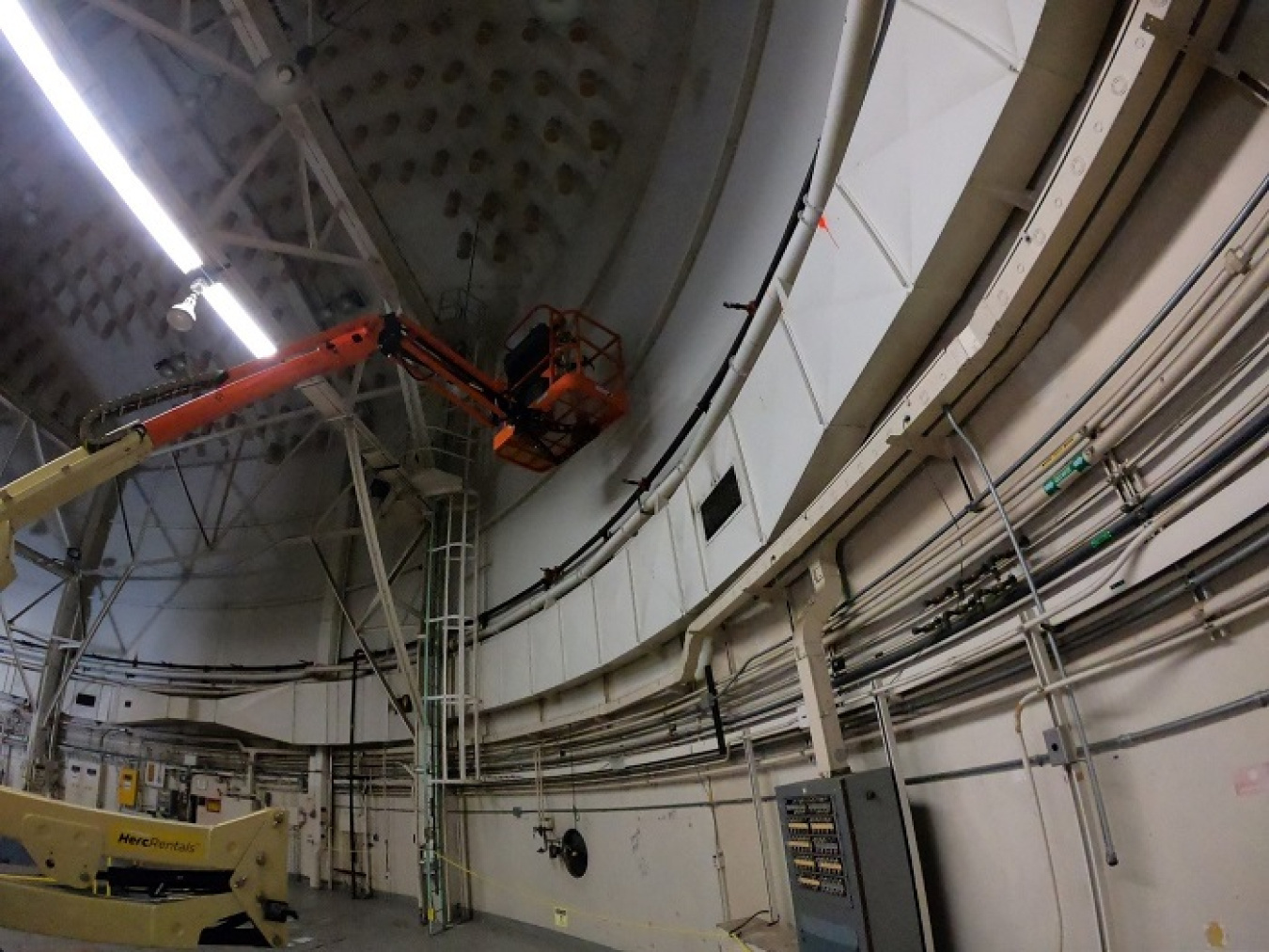
After demolition, the Lab separates the building from its slab and examines subsurface structures. This work is essential. Contamination beneath a building can remain hidden and inaccessible for decades and may only be fully investigated after the structure is removed. Yet, LLNL said it can only demolish a limited number of buildings each year because each project creates large amounts of waste that must be safely processed and disposed of.
That is evidence that the federal government allowed a large inventory of deteriorating and potentially contaminated facilities to accumulate without establishing the sustained funding and waste capacity necessary to remove them safely.
The demolition program began with $100 million in 2018 and later received additional annual funding. LLNL reported that no new money was provided for this work in fiscal year 2026. If funding continues to be withheld, the program could run out of money by 2029. LLNL would eventually like to begin demolitions at Site 300, but that work is also dependent on future funding. Meanwhile, the buildings continue to age.
The federal government cannot treat demolition as optional while continuing to use LLNL for expanding national-security missions. Returning cleaned land to NNSA for future use should not take priority over demonstrating that soil beneath demolished buildings has been thoroughly investigated and remediated. Regulators and the public must receive the sampling plans, results, waste-disposal information, and final closure determinations for each site.
Cleanup funding is being cut to the point of institutional failure
LLNL reported receiving approximately $29.944 million for environmental cleanup in fiscal year 2026: approximately $14.605 million for the Livermore Site and $15.339 million for Site 300. The Site 300 total includes approximately $1.519 million from the Department of Energy’s Office of Environmental Management. The Lab said it requested approximately $32.345 million for fiscal year 2027 to continue operating at its desired level. Staff nevertheless expected the final appropriation to be lower. The July 21 meeting minutes state that no new fiscal year 2027 budget information was available and that a continuing resolution was expected, creating additional uncertainty for cleanup staffing, system repairs, investigations, and demolition work.
LLNL acknowledged that reduced budgets since 2024 have already caused substantial staff losses and reduced environmental surveillance and restoration work. Staff warned that failure to receive the full fiscal year 2027 request could result in many more job losses and create a serious operational problem.
When experienced cleanup staff leave, institutional knowledge disappears with them. Monitoring, document preparation, regulator responses, system maintenance, field investigation, and community involvement all suffer. Rebuilding that capacity later will take time and may cost more than maintaining it now. Part of the additional fiscal year 2027 funding would also have supported final repairs following the Corral Fire. LLNL indicated that it may not receive that money.
The federal government created this contamination through decades of nuclear weapons research and related activities. It does not have the moral right to make cleanup dependent on whatever money remains after other priorities are funded.
Corral Fire damage continues to affect Site 300 cleanup
LLNL discussed cleanup systems in Site 300’s southeast corner that were damaged during the 2024 Corral Fire. Eight of the ten affected remedial systems were restored within several months. The Building 832 source-area groundwater and soil-vapor treatment systems later returned to full operation. However, the Building 830 source-area groundwater treatment system remains out of operation and requires additional funding.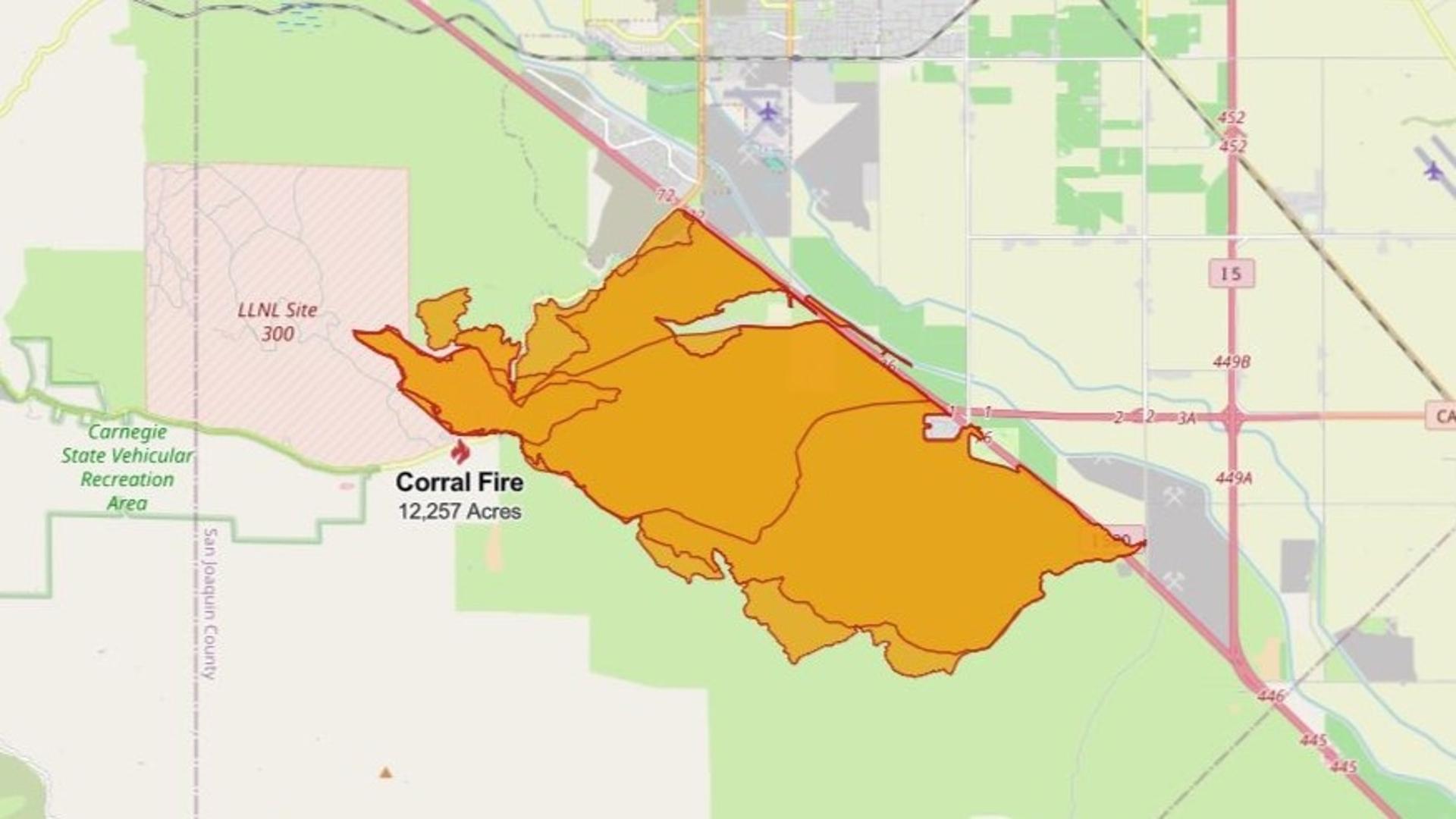
The Corral Fire should have triggered a comprehensive, publicly available assessment of wildfire vulnerability across Site 300; not only repairs to the systems that happened to burn. The Lab should identify which treatment systems, hazardous-waste units, electrical systems, pipelines, contaminated areas, and monitoring stations remain vulnerable to future fires. Those risks must also be addressed in Site 300’s hazardous-waste permit renewal.
Site 300’s cleanup schedule is unsettled
The discussion revealed that Site 300’s non-recurring regulatory document schedule is outdated and must be renegotiated. A 2023 schedule is no longer workable, and a replacement proposed in October 2024 received extensive regulatory comments. Major upcoming documents, including investigations involving the Building 865 and Building 812 areas, have further disrupted the schedule.
The timelines for several major investigation and remedy documents remain unresolved and will depend partly on the Lab’s funding profile and its ability to respond to regulatory comments. Funding limitations should not become a mechanism for repeatedly moving enforceable cleanup milestones into the future. If a schedule must change, LLNL and DOE should disclose:
- which milestones are being delayed
- why each delay occurred
- what environmental risks remain during the delay
- how much funding is required to avoid it
- which agency approved the revised deadline
- what interim protections will remain in place
PFAS investigations are decades late
At the Livermore Site, the Sixth Five-Year Review identified a basic information failure: the complete history of potential PFAS use and release has still not been compiled and evaluated.
LLNL’s PFAS Characterization Work Plan includes two suspected source areas associated with former fire-suppression training in the 2900 and 3700 blocks. It also calls for sitewide groundwater sampling in the first water-bearing zone. This is an important expansion beyond the two known training areas, but it does not replace the need for a comprehensive review of historical PFAS purchasing, use, storage, spills, firefighting activities, and waste disposal across the entire site.
Access to the 2900 Block is reportedly unlikely in the near term. At the 3700 Block, LLNL proposed soil borings extending to 25 feet below ground, with sampling beginning at 2.5 and five feet and continuing at five-foot intervals. Because the ground surface is covered by asphalt and gravel, the plan does not include surface-soil samples at the proposed boring locations.
Since winds at the Livermore Site generally blow from the west, firefighting foam could have been carried beyond the training areas. LLNL added sampling locations on both sides of these areas, which is helpful. However, it should expand the investigation if PFAS is found outside the currently proposed locations.
Regulators also noted a gap in groundwater monitoring near part of the site boundary. LLNL said it did not include wells there because the area was formerly used as a buffer zone and had no known chemical releases. However, this explanation relies on historical records that the Sixth Five-Year Review found did not yet provide a complete history of PFAS use at the Lab.
Regulators also raised concerns that PFAS from LLNL could leave the local groundwater basin and affect drinking water supplies. LLNL said PFAS found in Pleasanton likely comes from two other sources. Those possible sources do not remove LLNL’s responsibility to determine whether its own PFAS contamination has moved toward or beyond the site boundary.
LLNL should not limit its investigation to places where it already expects to find PFAS. It should complete a sitewide history of PFAS use and disposal, investigate all possible release areas, monitor groundwater near the site boundary, and publicly share sampling results and regulators’ comments.
PFAS and lead were confirmed beyond Site 300’s current boundary
At a former Navy fire-suppression testing area east of Site 300, LLNL collected shallow soil samples in September 2025 and again in January 2026. The land is now surrounded by wildlife habitat but remains under federal control because its contamination was never fully characterized.
LLNL reported that PFOA and PFOS exceeded applicable screening levels throughout the sampled area. Other PFAS compounds exceeded some screening values as well. The concentrations were high enough that the contamination was readily confirmed despite earlier analytical problems. LLNL now proposes an investigation to determine the extent of the PFAS contamination.
A nearby shallow groundwater well was sampled around 2017 or 2018 and reportedly contained very low PFAS concentrations. The Lab plans to return to the area and collect a new groundwater sample to determine whether PFAS has since migrated downward.
A metal-detector survey near the former fire-training area and pistol range also found old lead fragments in the soil. EPA had requested the survey partly because birds may ingest metal fragments while feeding or collecting grit. LLNL plans further soil sampling to characterize the lead.
This area presents overlapping chemical and ecological concerns: PFAS in soil, possible groundwater migration, legacy lead, and direct exposure risks to wildlife. Its location outside Site 300’s present boundary does not reduce federal responsibility for contamination caused by past federal activities.
Uranium contamination remains incompletely characterized
LLNL also presented new soil-sampling results from firing-table areas at Site 300, including Buildings 801, 802, and 804. These areas have a history of activities involving depleted uranium.
LLNL compared the samples with site-specific background threshold values. At Building 804, a small number of samples did exceed the relevant values. Results near Buildings 801 and 802 were much more concerning: multiple uranium isotopes exceeded background levels, and LLNL acknowledged the need for further characterization.
The Lab plans additional soil sampling and gamma-radiation surveys. These surveys are useful, but they also have detection limits and may not identify contamination buried deeper underground. Surface mapping must therefore be paired with subsurface sampling sufficient to determine both the lateral and vertical extent of contamination.
LLNL reported uranium above the applicable drinking water standard in groundwater downgradient of Building 802. The Lab said monitoring wells currently appear to bound the affected groundwater.
The Building 812 firing area remains a particularly important concern for TVC members. A previous feasibility study involving soil washing was unable to achieve a uranium concentration acceptable to regulators. LLNL indicated that a future remedy may require excavation and isolation of highly contaminated soil, depending on the final cleanup level and exposure assumptions.
Those “exposure assumptions” can determine how much contaminated soil is removed and how much is left behind. They must not be negotiated solely among DOE, LLNL, and regulatory agencies. Workers, nearby communities, and the broader public must be able to evaluate the proposed future-use scenario and cleanup level before a remedy is selected.
TVC requested sufficient time for members to review and comment on the forthcoming investigation and feasibility documents. LLNL acknowledged that some documents remain in draft or are being reconsidered following regulatory comments. TVC asked that draft-final versions be provided before decisions are finalized. Public comment offered after the agencies have already agreed on the outcome is not meaningful participation.
LLNL still treats “community involvement” as synonymous with tours
LLNL said its Community Involvement Plan remains in place and has not been updated. As evidence of renewed outreach after the pandemic, the Lab pointed to one Livermore Site tour and two Site 300 tours. TVC supports community tours, but tours are not a substitute for a functioning community-involvement program.
Marylia Kelley described the Livermore tour as overly promotional, excessively technical, and incomplete. The presentation emphasized the Navy’s role in historic VOC contamination in a way that appeared to minimize LLNL’s responsibility. Regardless of which federal agency pays what percentage, DOE and LLNL remain responsible for ensuring that the contamination is investigated, contained, cleaned up, and communicated honestly.
LLNL also suggested that the tour was unusually technical because many attendees had scientific or hydrogeological expertise. That explanation misses the point. A community tour should not require specialized training to understand. Technical participants may want greater detail, but the Lab remains responsible for explaining the cleanup clearly and providing accessible materials for everyone.
The discussion also exposed a deeper problem. LLNL said expanding community involvement would require resources it does not have and suggested that staff should not be diverted from physical cleanup.
But community involvement is not an optional public relations activity. It is a required part of the Superfund process. The public has a right to understand cleanup decisions, evaluate agency claims, comment on proposed remedies, and identify concerns that technical staff may overlook. LLNL cannot meet every other requirement first and offer public participation only if money remains.
The Lab also appeared to define outreach primarily through the number of tours offered. That ignores fundamental questions:
- Who receives the announcements?
- Are materials available in languages used by affected communities?
- Can people without technical training understand them?
- Are Tracy residents engaged differently from Livermore residents?
- Are meetings held at accessible times and locations?
- Can people participate virtually?
- Are draft documents shared early enough to influence decisions?
- Does LLNL actively reach environmental justice communities, or merely post information and wait?
LLNL initially suggested that there had been limited interest in the Livermore tour. TVC explained that several interested community members had tried to register but were told the tour was full. Some registered participants later cancelled or failed to attend, but their spaces were not effectively filled.
For next year, LLNL agreed to reserve a tour date and time capable of accommodating a larger TVC group. That is useful, but it is only one small improvement. LLNL must update its Community Involvement Plan to address accessibility, language, outreach methods, hybrid participation, document review, and the distinct needs of Livermore and Tracy communities.
Conclusions
The federal government continues to rely on LLNL for expanding nuclear weapons work while cleanup programs lose staff and operate under shrinking budgets. Contaminated buildings wait years for demolition. A groundwater treatment system damaged by wildfire remains offline. PFAS contamination is being investigated decades after the activities that likely caused it. Uranium in soil and groundwater remains incompletely characterized. Major schedules are revised around available funding. Community involvement is treated as a competitor to cleanup rather than an essential part of it.
The problem is not that LLNL scientists and cleanup workers are doing nothing. Many are performing difficult and necessary work under severe constraints. The problem is that DOE and NNSA have created a system in which environmental obligations are continuously forced to compete for inadequate resources while weapons related missions carry far greater institutional urgency.
TVC will continue pressing LLNL, DOE, NNSA, and the regulatory agencies for:
- full and stable funding for cleanup, monitoring, staffing, demolition, and wildfire repairs
- a comprehensive wildfire vulnerability assessment for Site 300
- full characterization of uranium in soil and groundwater near Buildings 801, 802, 804, and 812
- meaningful public review of important documents
- a comprehensive PFAS use and release history
- PFAS groundwater monitoring
- prompt clarification of the Site 300 hazardous waste permit process
- an updated Community Involvement Plan that includes multilingual, accessible, and genuinely participatory outreach
Para leer esta información en español HAGA CLIC AQUÍ!